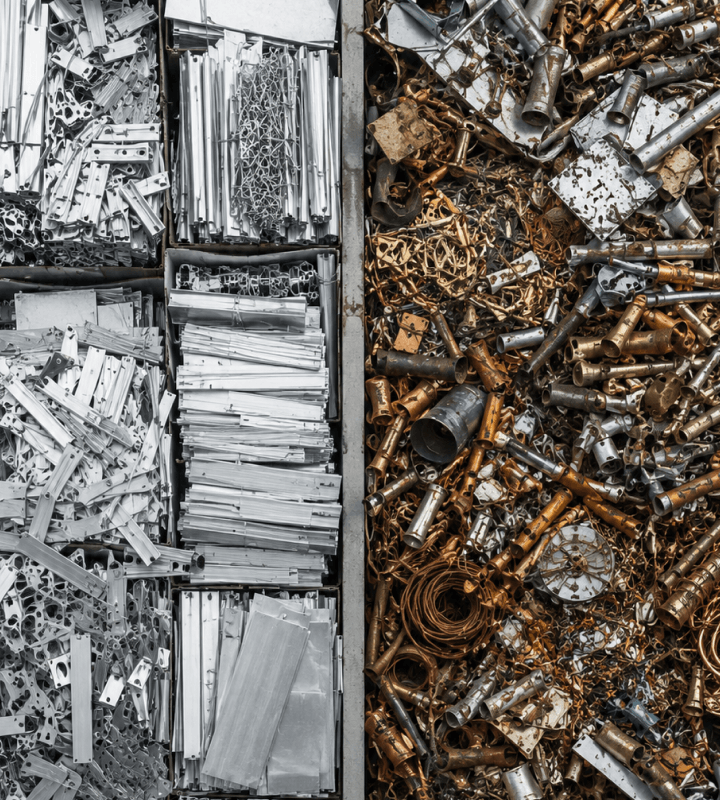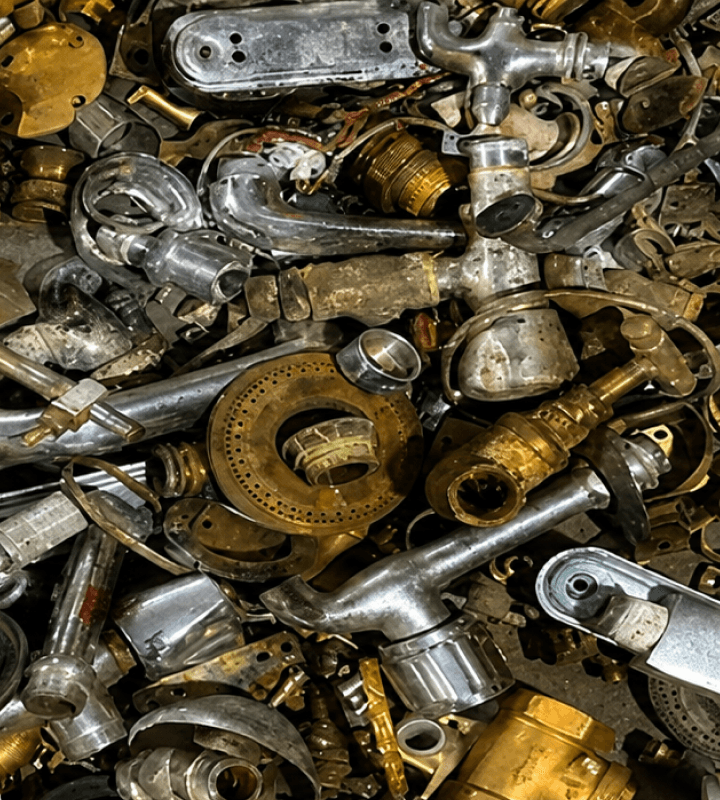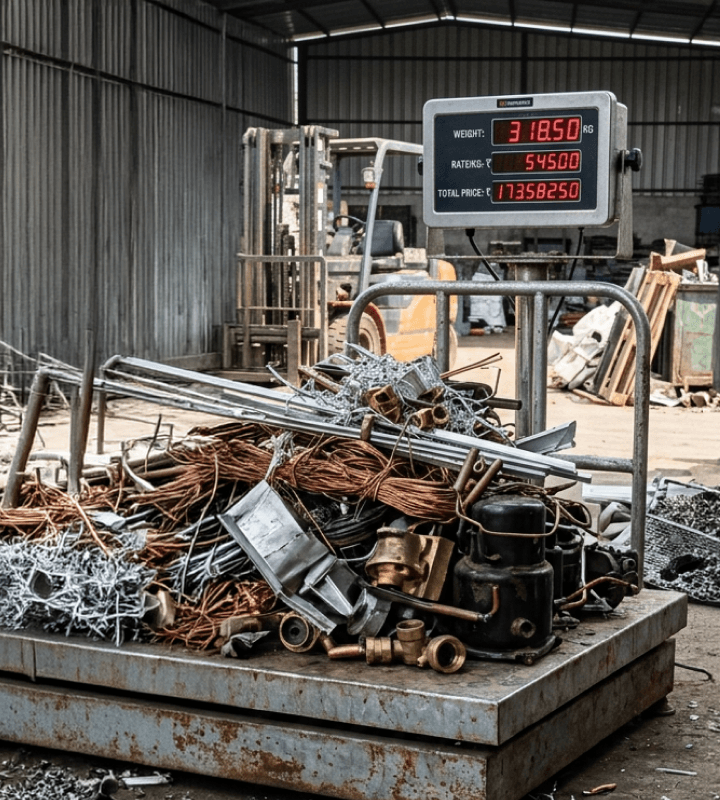
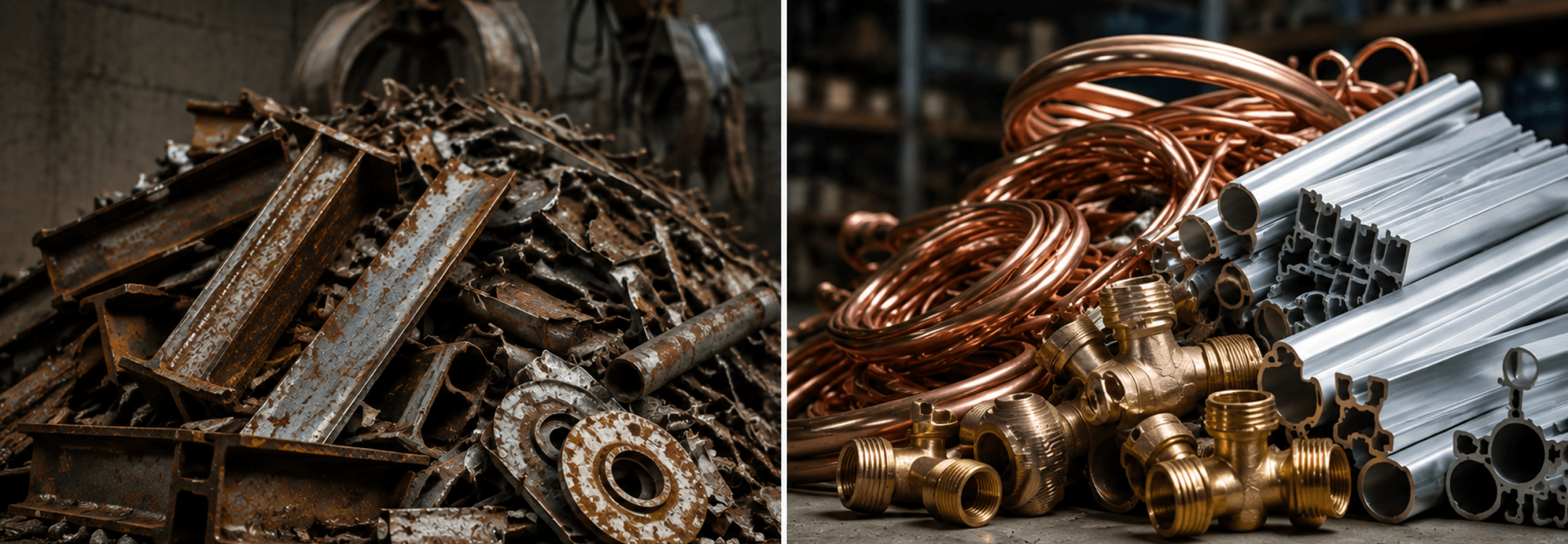
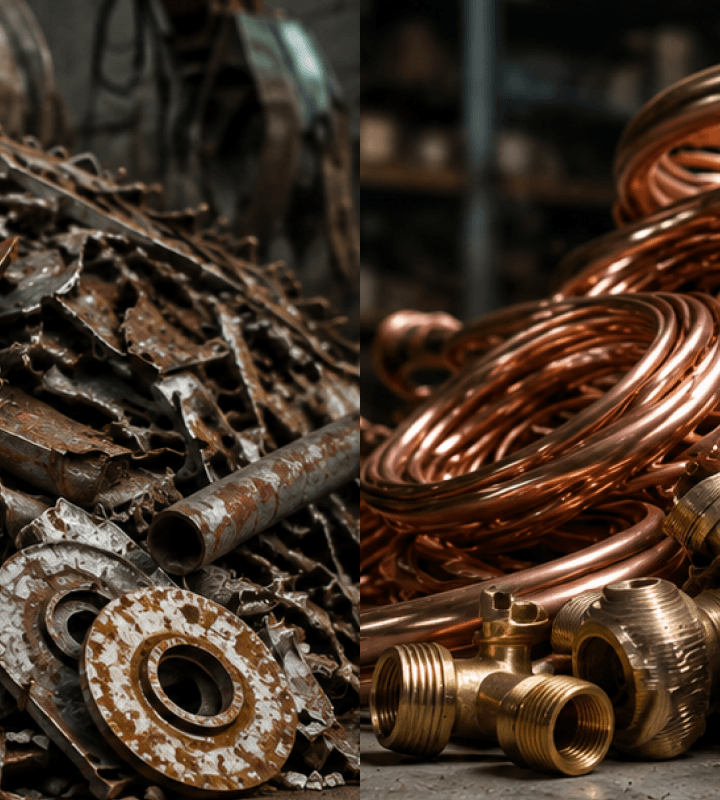
Scrap in India splits into two worlds that behave very differently. Ferrous scrap - iron and steel - moves largely off domestic mill demand, which grew 8.3% year-on-year to 41.6 million tons in April-June 2026. Non-ferrous scrap - copper, aluminium, and zinc - takes its cue from global exchanges, chiefly the London Metal Exchange, whose prices act as the reference for physical trading worldwide. Comparing a ferrous scrap price against a non-ferrous one is really comparing two different pricing logics.
At MetalMandi, we work across both. We are a digital scrap marketplace powered by Attero Recycling, buying directly from businesses with no middlemen. Our app shows live, real-time prices for MS, cast iron, copper or aluminium alike, and payments move fast once the material is verified. We work with 550+ vendors across India, with negotiation available wherever it applies.
Ferrous vs Non-Ferrous Scrap: Key Differences
Ferrous scrap contains iron and is magnetic, like MS, cast iron, and HMS. It trades in high volumes, feeds steel mills, and trades at a lower price per kg. Non-ferrous scrap, such as copper and aluminium, is non-magnetic, priced off global benchmarks, and typically commands far more per kilogram because recovery and refining costs are higher.
Key Factors That Influence Ferrous Scrap Prices
Ferrous scrap prices are influenced by several market and material-related factors. Steel demand, global metal prices, scrap availability, seasonal requirements, freight costs, and local market conditions can all impact daily scrap rates.
Iron and Steel Demand from Mills
Mill offtake drives everything. Rising crude steel production means mills need more scrap to blend with fresh iron ore and sponge iron.
Magnetic Grade and Purity
Clean, well-sorted ferrous scrap with minimal non-metallic waste fetches a stronger ferrous scrap price than mixed or rusted lots, since mills pay for what melts into usable steel.
Key Factors That Influence Non-Ferrous Scrap Prices
Non-ferrous scrap prices are influenced by global metal prices, demand from manufacturing industries, market supply, import and export trends, and currency fluctuations.
Global Base Metal (LME) Trends
Copper, aluminium and zinc scrap prices in India track movement on the London Metal Exchange, the global reference used across physical trade. A shift in LME copper ripples down to what a business gets for copper dori (copper wire) within days.
Purity, Alloy Composition and Contamination
Non-ferrous scrap prices swing hard on purity. Bare copper wire fetches more than insulated wire; aluminium ingots outperform mixed aluminium rassa; and alloy contamination pulls the whole batch to a lower blended rate.
Ferrous Metal Recycling: Process and Price Impact
Ferrous metal recycling is relatively straightforward - magnetic separation pulls iron and steel out of mixed waste efficiently, and graded material goes straight into furnace charge. Because separation is cheap, ferrous metal recycling prices stay closely tied to mill demand rather than processing cost.
Non-Ferrous Metal Recycling: Process and Price Impact
Non-ferrous metal recycling takes more work - eddy current separation, alloy testing and manual sorting are needed to tell aluminium soft rassa from aluminium hard rassa, or to separate brass from copper. That extra processing is why non-ferrous metal scrap prices sit higher; businesses are paid a metal genuinely more expensive to recover cleanly.
Why Choose MetalMandi for Ferrous and Non-Ferrous Scrap Trading
Ferrous and non-ferrous scrap are priced by different forces - one by domestic steel demand, the other by global metal exchanges - and treating them the same is where businesses lose out.
MetalMandi doesn't force every material through one pricing model. Our app tracks ferrous scrap price movements based on mill demand and non-ferrous scrap prices based on global benchmarks like the LME, so businesses see rates that reflect their actual material. As the direct buyer, with no middlemen, we keep the process transparent from quote to payment.
FAQs
What is the difference between ferrous and non-ferrous scrap?
Ferrous scrap contains iron and is magnetic, such as MS and cast iron. Non-ferrous scrap, like copper and aluminium, contains no iron and generally trades at a higher price per kilogram.
What factors influence ferrous scrap price the most?
Steel mill demand is the biggest driver, followed by grade, purity, and contamination. Freight and regional mill concentration also affect business nets locally.
Why are non-ferrous scrap prices generally higher than ferrous?
Non-ferrous metals like copper and aluminium cost more to mine and refine, and recovering them from scrap requires more processing, pushing prices well above typical ferrous scrap levels.
How does the recycling process affect ferrous metal recycling prices?
Cleaner separation before pickup improves furnace yield, supporting better ferrous metal recycling prices. Mixed or contaminated lots are priced down because mills recover less usable steel.
What is the cost of 1 kg scrap iron?
As of August 2026, ferrous scrap in India ranges roughly from ₹27.5 to ₹40 per kg depending on grade and cleanliness.