Most businesses focus on the bhaav (price) per kg when considering a scrap deal, but the final payout also depends just as much on how the material is weighed. A dispute over scrap metal weight is one of the most common reasons deals fall apart or trust breaks down between two parties, often after the material has already changed hands.
At MetalMandi, we are a digital scrap marketplace, powered by Attero Recycling to give businesses a fair and transparent way to recycle metal. As the direct buyer, we cut out the middlemen entirely, so factories, workshops, and recycling partners deal with us alone. Our live scrap rates update in real time on the app, payments move fast, and price negotiation is available wherever it applies.
MetalMandi works with 550+ vendors, from small scrap dealers to large industrial suppliers, across the country.
This guide walks through how weighing actually works, the machines involved, and what to check before you agree to a final number.
Why Accurate Weighing Matters in a Scrap Deal
The rate per kg only tells half the story; if the weight recorded at pickup does not match the weight recorded when the material reaches the buyer, someone loses money. This gap is where most disagreements between kabadiwalas (scrap dealers) and industrial suppliers begin, and it is why serious buyers insist on calibrated equipment and a documented weight slip for every load.
Common Methods Used to Weigh Scrap Metal
Different scales suit different volumes. A household appliance load and a truckload of factory scrap are not weighed the same way.
Manual Weighing Scales
Manual scales still handle a large share of small transactions, especially for local scrap dealers working out of a single yard. They are quick and cheap to maintain, but accuracy depends heavily on calibration and how often the scale is checked against a known reference weight.
Digital Scrap Weight Machines
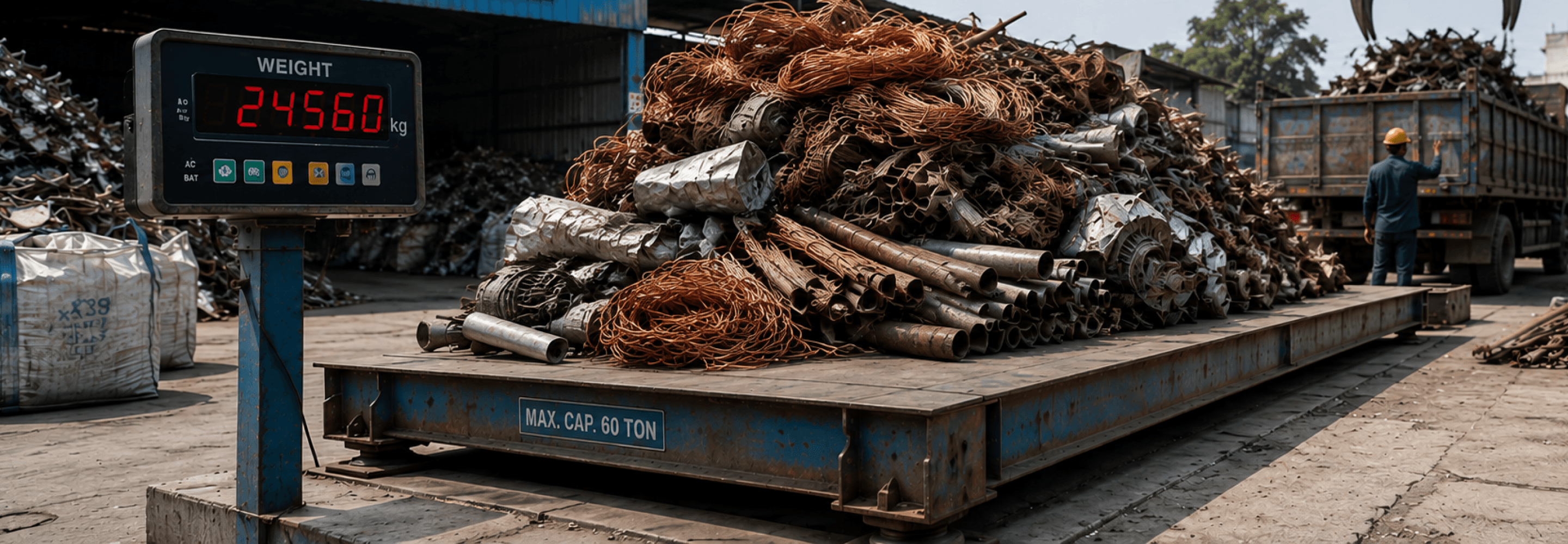
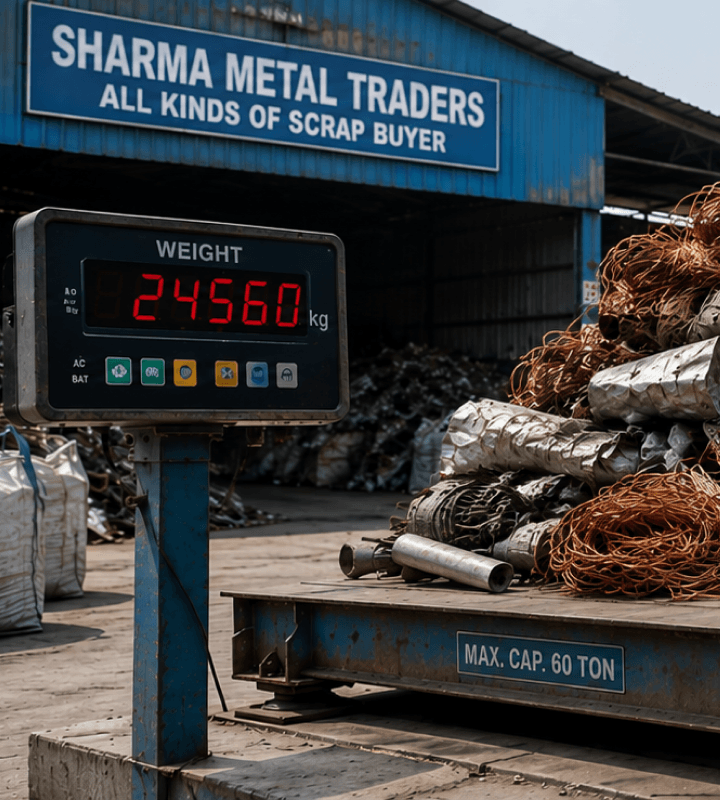
A digital scrap weight machine provides a direct numeric reading, eliminating reading errors and rounding. Most organised scrap operations, including MetalMandi's collection partners, use digital scales for anything beyond a small quantity since the reading can be logged instantly against the transaction.
Weighbridges for Bulk Loads
For bulk quantities, a weighbridge measures the vehicle's weight before and after unloading. The difference between the two readings gives the net weight of the material, eliminating the need to weigh scrap piece by piece and working well for factory scrap or warehouse clearance jobs.
Step-by-Step: How a Scrap Metal Deal Gets Weighed and Valued
- Material arrives and is visually sorted by type.
- Contaminants such as plastic or rubber are removed.
- The empty vehicle or container is weighed first as tare weight.
- The loaded vehicle is weighed again as gross weight.
- Net weight is calculated by subtracting tare weight from gross weight.
- The rate is applied, and a weight slip is issued.
Sorting Before Weighing
Mixed loads, such as copper wire scrap tangled with aluminium wire scrap, need to be sorted before an accurate reading can be taken. A load with hidden non-metal weight, such as insulation or dust, will always shortchange one side of the deal, which is why reputable buyers sort first and weigh second.
Tare Weight and Net Weight Calculation
Tare weight is the weight of the empty container or vehicle. Net weight is the amount remaining after subtracting the tare weight from the gross reading. This calculation is the actual basis for payment, so it is worth confirming that the logged tare weight matches your vehicle's known weight.
Recording the Final Weight Slip
The weight slip should show the gross weight, tare weight, net weight, material type, and the agreed rate. Keep a copy, physical or digital, since this is the document you would refer to if a dispute comes up later.
How Metal Scrap Collection Works, From Pickup to Weighing
Metal scrap collection usually starts with a pickup request, either by phone or, increasingly, via an app. A vehicle arrives at the site, material is loaded, and weighing happens either on-site with a portable scale or at a weighbridge once the vehicle reaches the collection point.
On the MetalMandi app, this entire chain is logged digitally, so the weight recorded on pickup is the same figure used for payment.
Types of Scrap Dealers You Will Deal With
Not every scrap dealer works the same way, and knowing the difference helps you understand where your material is headed.
Local Scrap Dealers
Local scrap dealers usually operate out of a single yard, buying a mix of household and small business scrap. They tend to deal in smaller quantities and often pass material further up the chain.
Copper Scrap Dealers
Copper scrap dealers specialise in copper wire scrap, copper cable scrap, and similar high-value non-ferrous materials, since copper commands a much higher rate per kg than ferrous scrap and requires careful sorting.
Large-Scale Scrap Metal Dealers
Large-scale scrap metal dealers handle bulk quantities from factories and warehouses, usually with an on-site weighbridge and a formal invoicing process, similar to how a direct buyer like MetalMandi operates.
Tips to Make Sure Your Scrap Is Weighed Accurately
- Ask for the tare weight before loading begins.
- Remove non-metal contamination beforehand.
- Request a copy of the weight slip on the spot.
- Use a buyer with digital or calibrated equipment.
- Cross-check the final weight against your own estimate.
With the MetalMandi app, you can connect with verified scrap buyers, access competitive market rates, and enjoy a more reliable scrap-selling experience backed by accurate weighing practices and transparent pricing.
FAQs
How do scrap dealers calculate the final weight of metal scrap?
They record the gross weight, which is the loaded weight, and the tare weight, which is the empty weight. Then they subtract the tare weight from the gross weight to get the net weight, which is the figure used for payment.
What is tare weight and why does it matter in scrap deals?
Tare weight is the weight of the empty vehicle or container. It matters because the net weight, and therefore your payout, is calculated by subtracting tare weight from the gross reading.
Are digital scrap weight machines more accurate than manual scales?
Generally, yes. Digital machines eliminate reading errors and can log results instantly, whereas manual scales rely more on regular calibration and careful reading.
How does metal scrap collection work before weighing?
Collection typically starts with a pickup request, material is loaded onto a vehicle, and weighing happens either on-site with a portable scale or at a weighbridge before payment is settled.
Do local and copper scrap dealers use the same weighing process?
The basic principle is the same, but copper scrap dealers usually sort more carefully first, since copper's higher per-kg rate makes contamination or mixed loads far costlier to miscalculate.