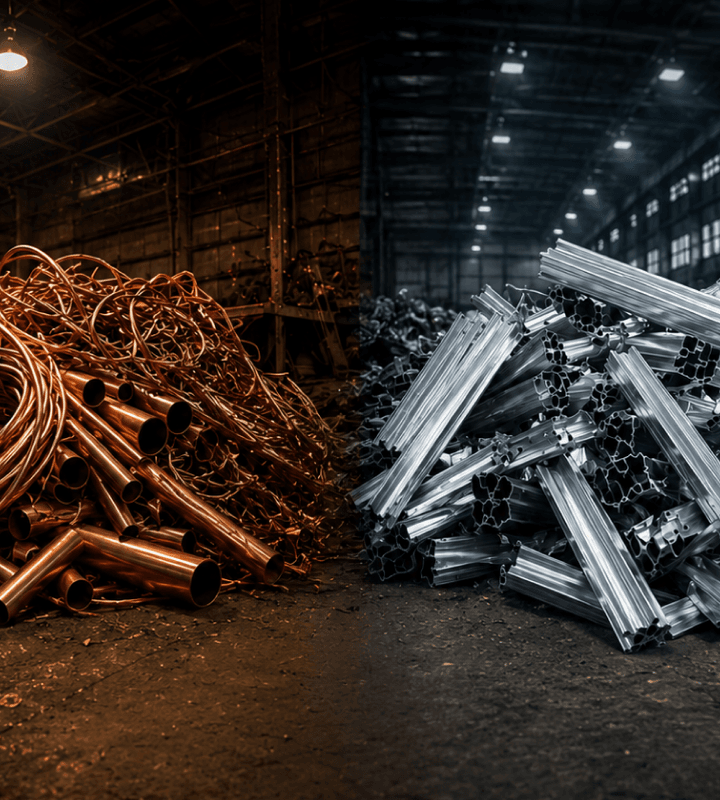
Copper prices on the London Metal Exchange crossed USD 14,000 per tonne for the first time in January 2026, supported by AI and data-centre demand, US tariff-driven stockpiling, thin available LME inventories and strong China-led trading activity. Aluminium hasn't stayed far behind either. By March 2026, LME aluminium forwards were rallying too, with global stocks falling to around 432,725 metric tonnes after smelter disruptions in the Middle East tightened supply. This kind of global movement matters more than most businesses realise, because it filters straight down to what a kabadiwala (scrap dealer) or a factory owner in India gets paid for a kilo of copper wire or aluminium sheet.
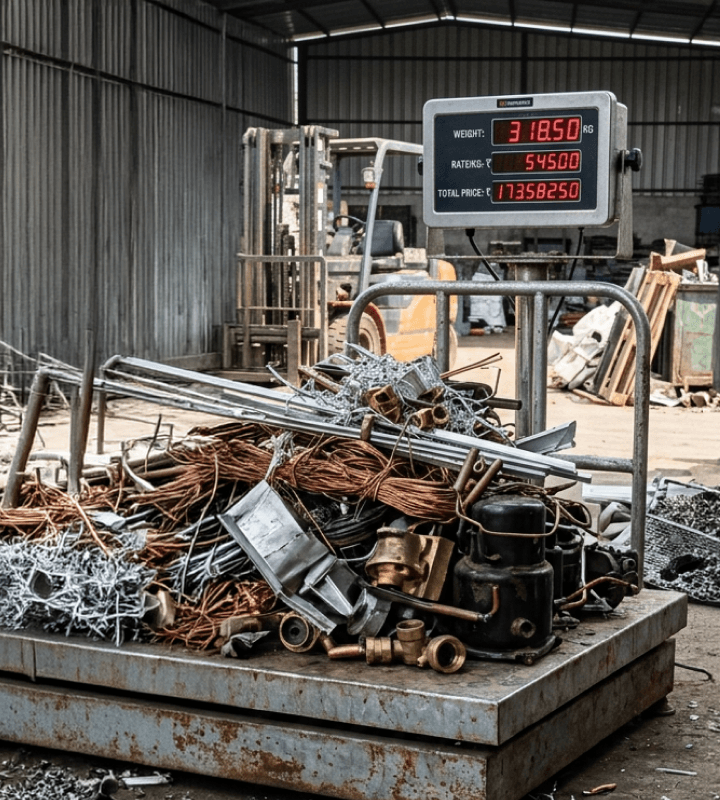
This is exactly the gap MetalMandi was built to close. As a digital scrap marketplace, powered by Attero Recycling, we buy aluminium and copper scrap directly from businesses across India. Our platform tracks live market rates and updates pricing in real time, so what you see reflects the actual global movement, not a number someone quotes over the phone. Payments are fast once material is verified, and price negotiation is possible depending on quantity, grade, and location.
Aluminium Scrap vs Copper Scrap: Rate Comparison
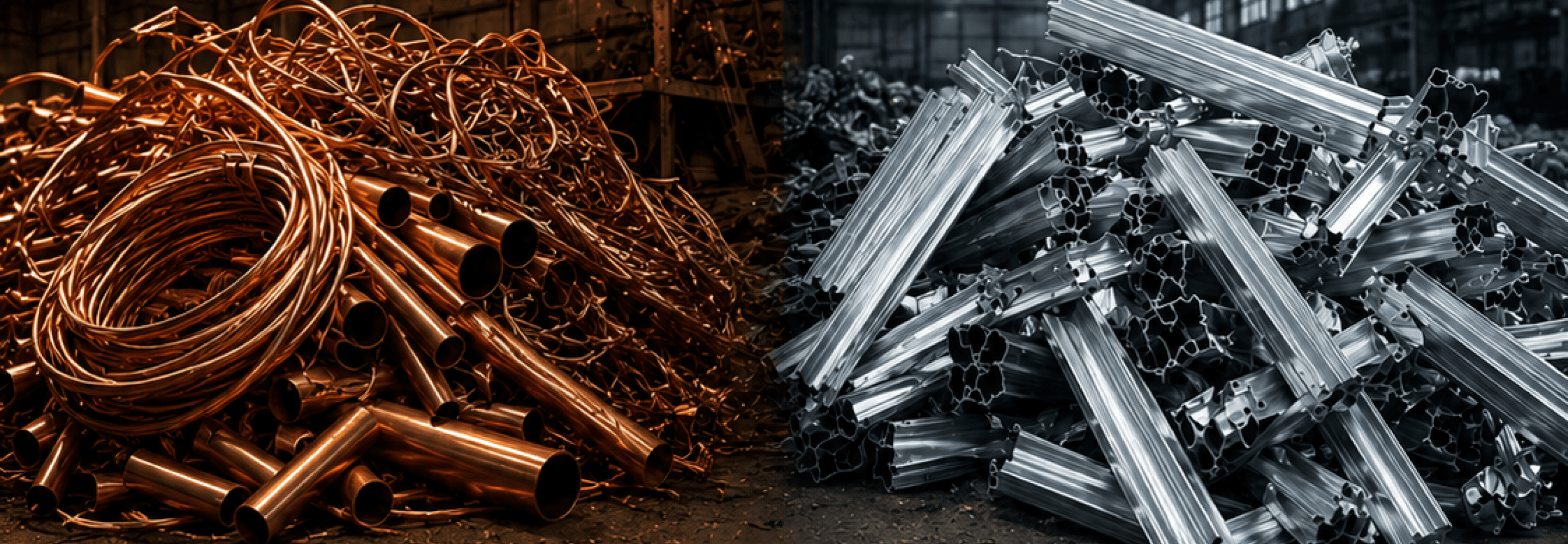
Copper scrap almost always trades higher per kg than aluminium scrap, and this isn't specific to any one platform or dealer. It reflects how the two metals are priced globally. Aluminium is lighter, more abundant, and cheaper to produce from ore, which keeps its base rate lower. Copper is denser, harder to mine at scale, and central to electrical and industrial applications, which keeps demand and price consistently firmer.
Why Copper Scrap Rates Are Higher Than Aluminium Scrap Rates
Copper scrap rates are generally higher than aluminium because copper is more valuable, conducts electricity better, and has stronger demand across construction, electrical and industrial applications. The difference also reflects their availability, recovery value and market demand.
Base Metal Value & Global Pricing (LME Copper vs LME Aluminium)
The LME itself describes copper as a highly conductive, durable metal that is crucial to electrical systems, construction, and green technologies such as electric vehicles. Both copper and aluminium are benchmarked against LME prices, which move daily on global supply and industrial demand. Copper has traded at several multiples of aluminium's price on the LME for years, largely because copper ore is scarcer relative to demand and needs more energy to refine.
Density & Weight Factor
Copper is more than three times denser than aluminium. For the same physical volume of material, copper weighs more, so a bundle of copper wire will always be heavier than the equivalent volume of aluminium as copper scrap per kg fetches a noticeably higher price.
Industrial Demand: Copper Wire Scrap Price vs Aluminium
Aluminium is lightweight, durable, infinitely recyclable, vital to construction, transportation, and packaging due to its strength-to-weight ratio. That demand is real and growing, but it doesn't carry the same premiumness as copper, which remains essential to wiring, motors, and transformers.
Purity, Grades, and How They Affect Rate
The purity and grade of scrap metal directly affect its market value. Higher-purity copper or aluminium scrap usually commands a better rate, while mixed, contaminated or lower-grade material may be priced lower due to additional processing requirements.
Aluminium Grades
Aluminium scrap comes in several recognisable forms in the Indian market - aluminium rassa (thick wire), aluminium soft rassa, aluminium hard rassa, aluminium wire, and aluminium ingot. Clean, single-alloy scrap with no coating or mixed metal content consistently earns a better aluminium scrap price than mixed or painted material.
Copper Grades
Copper scrap is graded mainly by purity and form - copper rassa, copper ingot, laal dori (red wire), and copper dori (copper wire). Bright, uncoated copper wire earns the best copper wire scrap price, while tinned, enamelled, or burnt copper trades lower because more processing is needed to recover pure metal.
What Affects Scrap Rates for Both Metals
- Daily LME movement and the rupee-dollar exchange rate.
- Purity and how well different metals are segregated before pickup.
- Bulk loads often earn better per-kg rates.
- Distance to the nearest MetalMandi collection point.
- Contamination from plastic, rubber, or other mixed metals.
Recycling Value & Efficiency: Aluminium vs Copper
Both metals can be recycled repeatedly without losing their core properties, which is part of why scrap recycling matters for a genuine circular economy. Aluminium recycling uses only a fraction of the energy needed to produce new aluminium from bauxite ore, which keeps aluminium recycling prices attractive for businesses generating large volumes of industrial waste. Copper retains its properties through repeated recycling with minimal loss and retains strong resale value even after several recycling cycles.
How to Track Aluminium and Copper Scrap Rates on MetalMandi
MetalMandi app shows live, AI-powered rates for both metals, updated as global LME prices and local demand shift. Businesses can check the current rate before scheduling a pickup, negotiate where applicable for larger volumes, and get paid quickly once material is weighed and verified on-site. There's no need to call around multiple local traders hoping for a better number. The rate on the app is the rate you get.
Copper scrap will nearly always beat aluminium scrap on rate per kg, driven by density, refining cost, and steady industrial demand that aluminium doesn't carry in the same way. But both metals remain genuinely profitable when purity, grading, and timing are handled properly, and that's where dealing directly with a transparent, technology-driven buyer like MetalMandi makes a measurable difference to what lands in your account.
FAQs
Which scrap gives a better rate, aluminium or copper?
Copper scrap typically offers a higher rate per kg than aluminium scrap, mainly due to its density, refining cost, and steady industrial demand from wiring, motors, and electronics manufacturing.
Why is the copper scrap price higher than the aluminium scrap price?
Copper is scarcer, denser, and costlier to refine than aluminium. It also sees continuous demand from the electrical industry, which keeps its LME-linked price consistently above aluminium's.
What is the copper price per kg in the scrap market today?
Copper scrap price per kg changes daily based on LME movement, rupee value, and grade. Check MetalMandi's app for live, location-based rates before scheduling a pickup.
Does copper wire scrap price vary by grade?
Yes. Bright, uncoated copper wire earns the highest rate, while tinned, enamelled, or burnt copper wire trades lower due to the extra processing needed to recover pure metal.
Is aluminium scrap still profitable to recycle despite lower rates?
Yes. Aluminium recycling uses far less energy than fresh production from ore, and with consistent volumes, businesses still see healthy, dependable returns through a transparent platform like MetalMandi.